Colorado's Best Hot Springs: A Complete Guide to Soaking Across the Centennial State
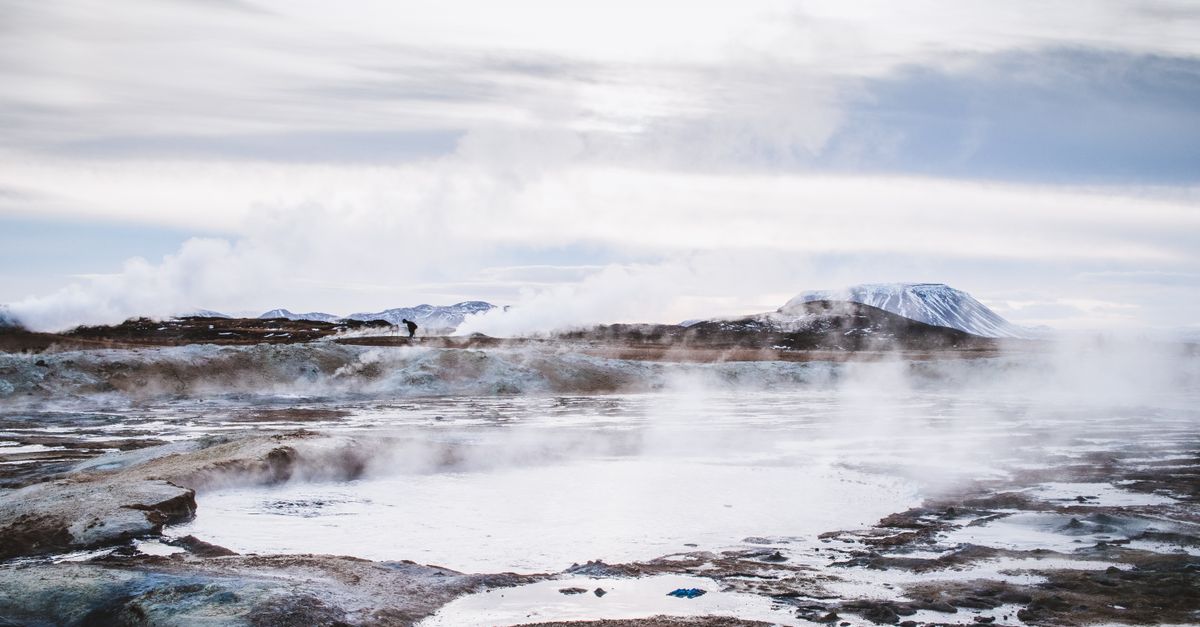
Photo by David Hitchcock via Pexels
Why Colorado Dominates the Western Soaking Map
Colorado sits atop one of the most geologically active thermal regions in North America. The state's Rocky Mountain terrain overlays a complex network of fault lines and volcanic heat sources that bring mineral-rich water to the surface at dozens of documented locations. The Centennial State averages roughly 26 naturally occurring hot springs per 10,000 square miles, a density unmatched by any other state in the lower 48.
This abundance reflects not just volume but variety. Colorado soaks range from ADA-accessible resort pools with changing rooms and concession stands to rope-swing cliff jumps into thermal plunge pools surrounded by ponderosa pines. Some sites charge $20 for all-day resort access. Others require a 12-mile round-trip hike with stream crossings and avalanche awareness. The diversity exists because Colorado's hot springs occupy a legal and cultural spectrum that took 150 years to develop, and that spectrum matters for how you plan your trip.
The Mineral Profile: What Makes Colorado Water Different
Colorado's hot springs fall into three mineral classifications, each with distinct therapeutic claims and sensory experiences. The most common profile, found at soaks throughout the San Juan Mountains and along the Arkansas River corridor, combines sodium bicarbonate with trace lithium and hydrogen sulfide. Water in this category typically registers between 102°F and 106°F at the source, cools to comfortable soaking temperatures in concrete or stone pools, and carries a distinctive smell from the sulfur compounds. The smell is harmless at these concentrations, though you'll notice it.
A second category, present at several sites near the Continental Divide, delivers calcium-magnesium bicarbonate water with lower mineral content and clearer scent. These soaks tend toward cooler temperatures and suit longer sessions. The third category, less common but worth knowing about, includes thermal springs with detectable arsenic levels, typically in the 0.05 to 0.1 mg/L range. That's below EPA drinking standards, but it's worth knowing before you fill a water bottle from the source.
A 2019 environmental health assessment from the Colorado School of Public Health noted that moderate soaking in the state's thermal springs carries minimal risk for healthy adults, though pregnant individuals should verify specific site mineral profiles before exposure. The school's recommendations align with what on-site naturalists at major destinations like Our Hot Springs and Cottonwood Hot Springs advise: stay hydrated, limit sessions to 30 to 45 minutes initially, and shower before entering shared pools.
Land Management: Who Controls Access and How It Shapes the Experience
This is where Colorado's soaking culture diverges most sharply from other states. Roughly 40% of Colorado's significant hot springs lie on private land. Some have been in continuous family ownership since the 1870s. Others operate as commercial enterprises with century-old water rights attached to the property deeds. Another 35% occupy National Forest or BLM-administered public land where access is free but facilities are minimal or nonexistent. The remaining 25% involve hybrid arrangements. Private landowners may maintain pool infrastructure on public land via special use permits. Or public agencies manage facilities on private land via access easements.
The practical consequence for visitors is straightforward: always verify access status before your trip. Free roadside soaks on National Forest land near Silverton and Telluride attract hundreds of visitors weekly during summer months, generating trash, human waste, and occasionally conflict with adjacent private landowners. The San Juan Mountains are experiencing measurable impacts at several popular sites, prompting the Rio Grande National Forest to implement seasonal parking restrictions at trailheads serving hot springs routes. The Forest Service reported a 340% increase in visitation to the Matter Creek hot springs corridor between 2015 and 2023, a rate that outpaced infrastructure investment by a significant margin.
Commercial resort soaks operate under different dynamics. Properties like Iron Mountain Hot Springs in Carbondale, which opened in 2015, invest millions in filtration systems, mineral balancing, and guest amenities that justify $35 to $45 daily admission. These venues provide certainty. You know the water chemistry, temperature, and facility status before you arrive. The trade-off is the managed experience. No wilderness approach, no stream-side ambiance, no sense that you discovered something. For many visitors, that trade-off is worth it. For others, the hour-long drive to a trailhead followed by a mile hike into a canyon feels like the actual point.
Understanding Water Rights and Access Law
Colorado's prior appropriation water rights system, established in the 1870s, creates situations that confuse even longtime residents. A hot springs resort may own water rights to a spring but not the land above it. Conversely, a landowner may control surface access to a thermal spring but lack rights to divert or modify the water flow. The Colorado Water Conservation Board maintains a public database of adjudicated water rights, searchable by geographic area, but interpreting the records requires familiarity with water law terminology.
For the soaking public, the practical implication is that posted signage controls. If a sign says "Private Property," the water rights holder has chosen to restrict access, and in Colorado, that choice is legally enforceable. If a site sits on public land with no signage, the public has access under the Clean Water Act and state open space statutes. The confusion arises at sites like St. Mary's Glacier Hot Springs, where the soaking area sits on private land but the surrounding trail crosses public right-of-way. This configuration leads to frequent disputes and occasional police involvement during peak season.
Clothing-Optional Culture: Norms, Exceptions, and Legal Status
Unlike Oregon, where the state legislature formally designated certain soaks as clothing-optional in 2017, Colorado has no statewide policy. Clothing-optional status exists at individual sites by owner discretion, community norm, or historical practice, and the distinction matters legally.
At 14 documented sites across Colorado, clothing-optional soaking is explicitly permitted and openly practiced. These include the Our Hot Springs property, family-owned since 1891 and consistently clothing-optional by owner preference, several established sites in the Glenwood Springs corridor, and two remote BLM-administered soaks in the San Luis Valley where decades of continuous use have established de facto policy regardless of official signage. At these locations, nudity carries no legal risk under state law and is socially normalized. Morning soak sessions at Our Hot Springs regularly include nudists from the adjacent nudist resort, older couples who have frequented the site for decades, and young hikers who discovered it via social media and arrived expecting a clothing-optional environment.
At the majority of Colorado's hot springs, including most commercial resorts and all National Park-adjacent sites, clothing is expected or required. This is typically stated in posted rules, enforced by staff at paid venues, and maintained by social expectation at free sites. Glenwood Hot Springs, the state's largest commercial facility, maintains family-appropriate dress codes throughout its pool complex. The Mount Princeton Hot Springs resort similarly requires swimwear in all developed pools, though the adjacent natural creek soaks operate under different rules.
For visitors uncertain about the status of a specific site, the heuristic is simple. If you see families with children, regular swimwear, and people setting up lawn chairs, dress accordingly. If you see a hand-painted sign saying "Clothing Optional" and a pickup truck with Montana plates idling nearby, assume the opposite. The Colorado Hot Springs Association maintains a members-only forum where locals and regulars discuss current conditions and social norms at individual sites, worth joining if you plan multiple visits.
Planning Your Colorado Soaking Trip: Logistics and Timing
The ideal soaking window in Colorado runs from late May through early October, when snowmelt stabilizes creek levels and trail access is reliable. July and August bring the highest visitation at free sites, particularly along the Continental Divide Trail corridor and in the San Juan Mountains. September offers a sweet spot: thinner crowds, golden aspens visible from most high-altitude soaks, and water temperatures still comfortable in afternoon sun.
Commercial resorts operate year-round. Glenwood Hot Springs, Mount Princeton Hot Springs, and similar venues see their highest attendance in December and January, when ski season brings visitors to the I-70 corridor and mountain towns. Winter soaking at these venues draws visitors specifically for the contrast between sub-freezing air temperatures and 104°F water. If you plan to visit during ski season, book weekday sessions. Weekend capacity fills by mid-morning.
Free soaks present different logistics. Most require high-clearance or four-wheel-drive vehicles for the final approach roads, which are often unmaintained dirt tracks that close seasonally. Carry the "10 Essentials" for any hike-in soak: headlamp if there's any chance you'll be returning after dark, emergency shelter, water, and a method to treat water if you plan to drink from the spring. Stream crossings on approach trails can be hazardous during snowmelt. A walking stick and waterproof boots prevent most problems.
The Colorado Hot Springs Guide, updated annually by a nonprofit collective of soaking enthusiasts, provides detailed driving directions, current condition reports, and crowd-level forecasts for more than 50 sites. The guide is available at visitor centers throughout the state and represents the most reliable public resource for planning independent soaking routes.